
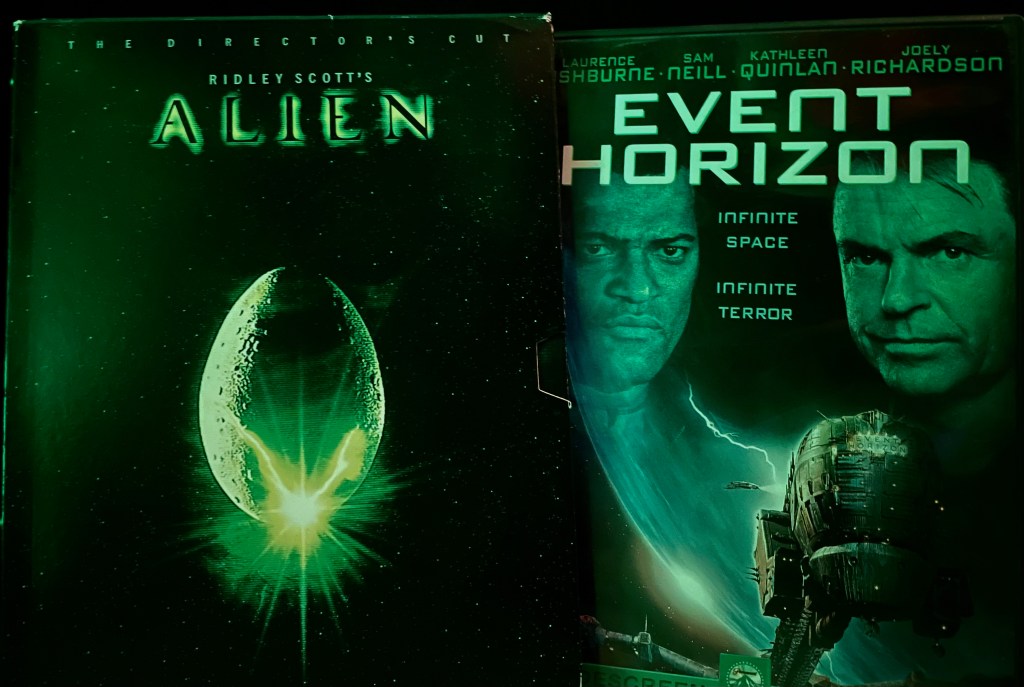
Movies with iconic design can inspire the look and feel of entire genres. Alien is one of those films. Its the near-perfect concoction of science fiction and horror, with anachronistic tech design that creates the “spacepunk” aesthetic and organic-looking alien structures that confound the eye when trying to identify what is alive and what is structural. The Alien anthology is immediately identifiable at a glance, even without the antagonistic xenomorph in the frame. Its design created an overall feeling of isolation and dread that, if attempted today without incorporating Alien design elements, would fall flat. Who wants shiny, polished space-faring vessels with holographic displays and luxury amenities when viewers would accept a grimy, industrial-looking monstrosity of a ship with the crew performing vital activities on Apple IIs? In my recent viewing of two space horror movies, Alien being one, I was more aware of Alien’s influence on the sci-fi genre. I’ve always been aware of cinematic elements that look like Alien, but now, they really jumped off the screen.
First, let me further expand, as a fanboy, on Alien’s influence. Seventies and Eighties, and hell, even Nineties, Sigourney Weaver could certainly get the blood pumping and perk one up. Her character, Ripley, is etched in the stars as a sci-fi legend. John Hurt’s chest exploding open created a scene that is easily identifiable by anyone with moderate film knowledge and made for good spoof-fodder across subsequent decades. And, let’s not forget about the alien itself, Mr. Xenomorph, the “perfect organism”. Its glossy, slimy black body with elongated head, a tongue game that will crack skulls, and blood that will literally melt your heart, are pop culture icons.
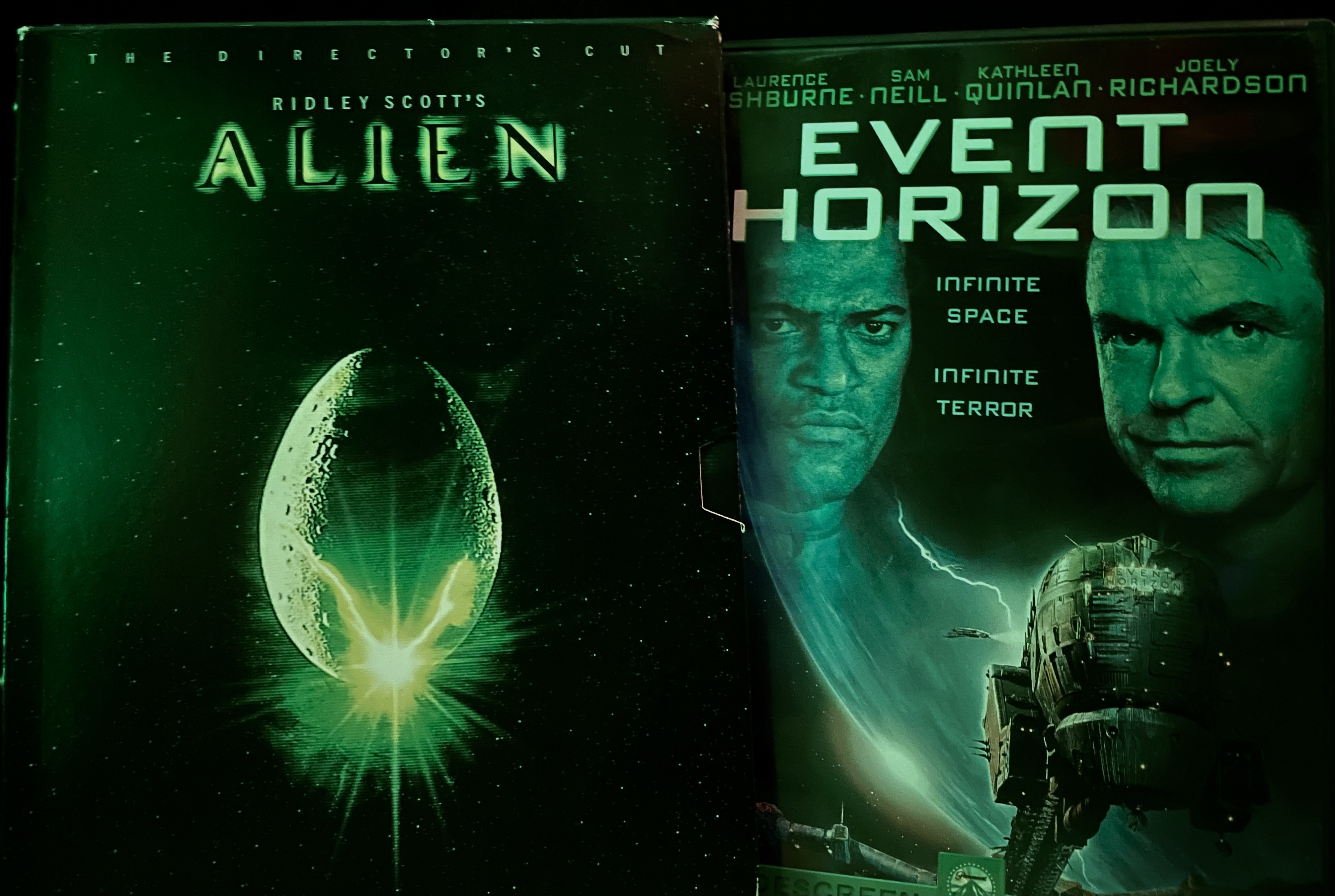
Fast forward to 1997, the Event Horizon returned from parts unknown after being missing for seven years, and a deep space rescue crew, captained by Laurence Fishburne, was dispatched to check for survivors and determine what happened to the ship. I’ve always been aware of the movie Event Horizon and remember watching a “making of” on HBO, but I never felt compelled to watch the movie in its early release window. I never felt compelled, that is, until the band Zao used sound samples from the film on their 1999 album Liberate Te Ex Inferis. This occurred during a time in my life when I was engrossed in hardcore and metalcore music, and I happened to get very into this album. This interest led me to want more context for the samples, so, I finally experienced Event Horizon…on VHS.
I’ve appreciated the film ever since. It’s not perfect, but Event Horizon specializes in unease and dread by pulling together characters with troubled backstories, the inherent fear of complete isolation, and the general mystery surrounding the occult and supernatural. As I watched the crew battle evil and struggle for survival, I recognized Alien’s influence. The Event Horizon embodies the industrial behemoth motif for ship design; it looks more menacing than functional for space travel. Technology remains in the “spacepunk” aesthetic, carrying out futuristic functionality while the machinery feels decades or centuries outdated. Characters unknowingly stumble into a situation they are ill-prepared to survive and spend the film becoming separated from one another to face their fates. Event Horizon is enjoyable (if watching horror movies is an enjoyable experience) space-terror that carves its own place in the pantheon of sci-fi horror while building upon the bricks laid by its predecessors. Watching Event Horizon and Alien in close proximity, and noticing Alien’s influence more than in past viewings, I got to wondering about other examples out there and arrived at the conclusion that I have some cinematic exploration to do. If you want to see some classics that make you happy to be grounded on Earth, I recommend starting with these two gems.
 HobbyScope